Twelve volts or twenty-four: choosing a ride-on that is still used in April
The surface outside your own front door settles this before the price does. What a 12V car can and cannot do, what the second motor buys, and the two numbers to measure first.
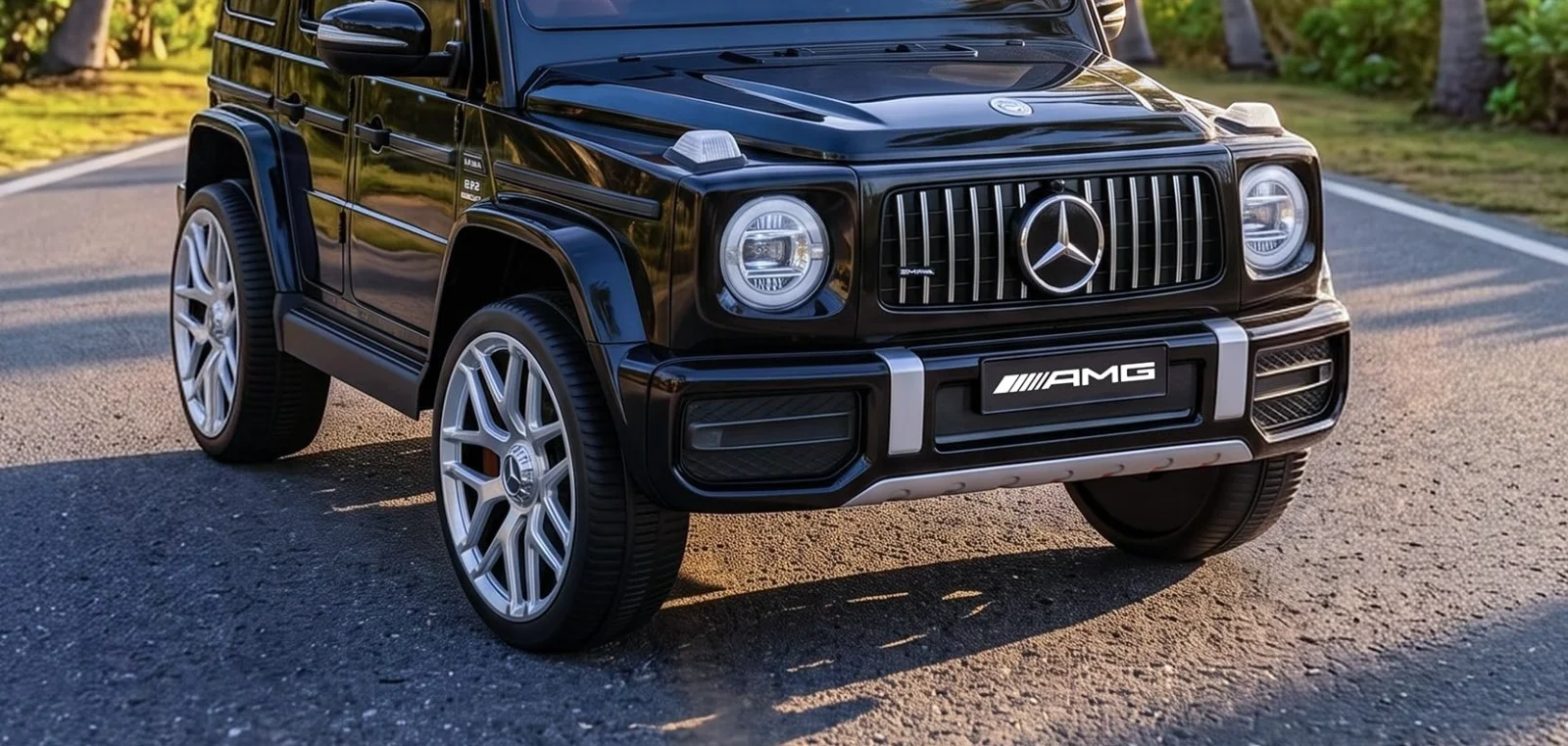
Step outside with your coffee and look at the surface your child will actually drive on. Concrete or paving stones offer the least resistance, and a twelve volt machine will cross them without strain. The small motor draws modest current on smooth ground, giving the full forty to ninety minutes of run time the pack allows. Even a slight incline on a driveway will slow the machine and shorten that window significantly, as the motor works harder against gravity.
Grass changes the equation entirely. A single motor rated at thirty-five watts, common in the lighter cars, stalls against wet turf or a modest slope. The wheels spin, the battery drains faster, and the child learns that throttle does not always mean motion. Gravel presents the same problem with sharper edges. Small tyres sink into it, the motor works against the surface rather than across it, and you end up pushing the car back to the garage more often than you push the mower. Mud stops it completely.
Twenty-four volt machines carry larger packs and often place a motor at each wheel. Five models in the range have four-wheel drive, distributing the load so wet grass or a gentle incline becomes passable rather than impassable. The tyres are moulded EVA, not hard plastic, which helps on damp driveways and leaves no black mark on garage floors. Speeds on four wheels reach four to five miles an hour on level ground with a full battery, though grass, a slope and a heavier rider each reduce both speed and run time.
If your yard is mostly lawn, or if the driveway tilts toward the street, the voltage decision has already been made for you. The twelve volt machine will spend April stuck in mud while the twenty-four volt model crosses the lawn to the sidewalk.
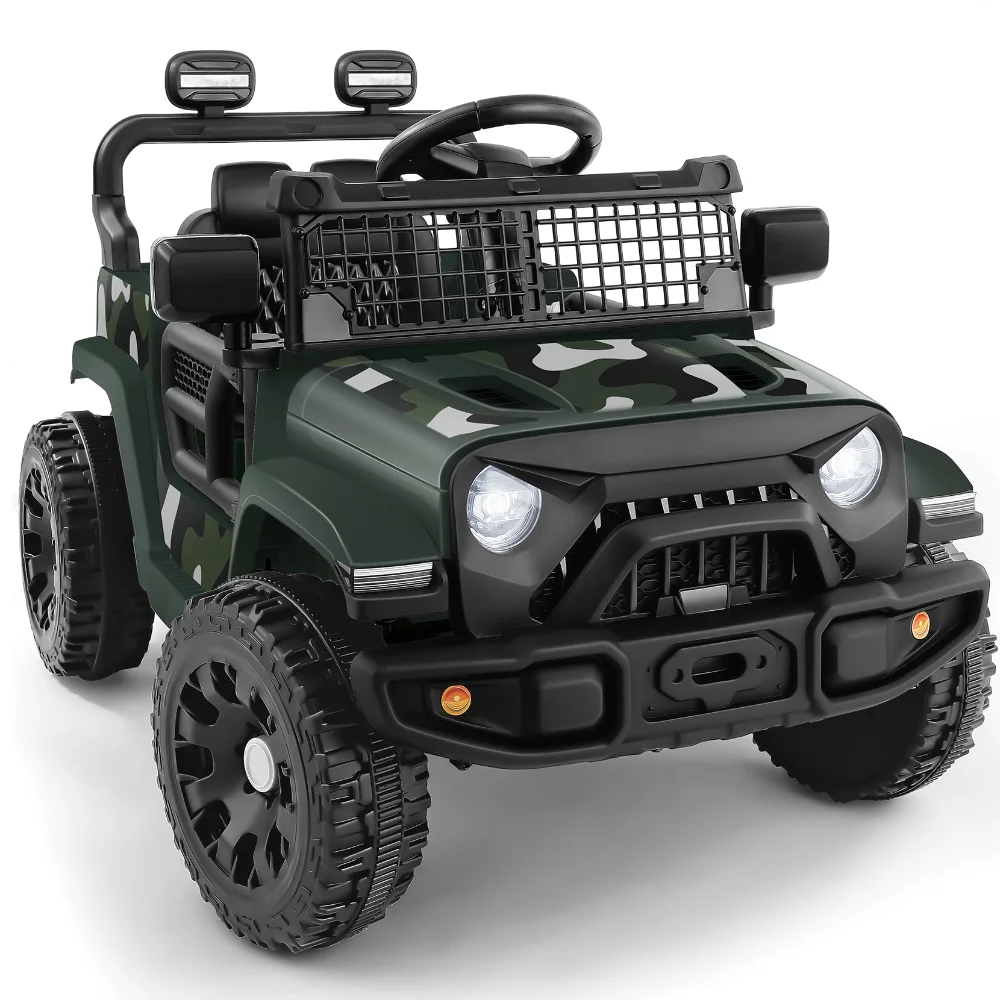
Measure the child, not the birthday
The age range printed on the box is the least useful number in the decision. Children of the same age vary by inches and pounds, and a machine that fits one six-year-old will crowd another. We suggest putting the box aside and taking three measurements instead.
First, the width of the seat at its narrowest point. A child whose hips are wider than the plastic bucket will sit on the edge rather than in it, shifting weight unevenly and making the machine tip on turns. Second, the reach from the seat back to the pedal. If the knee is bent sharply at full extension, the child will cramp within minutes. If the leg cannot reach, they cannot brake properly. Third, the actual weight of the rider, taken on a bathroom scale while fully dressed with shoes on, since that is how they will ride.
Twelve volt machines carry limits around sixty-six pounds. Twenty-four volt models accept between eighty-eight and one hundred fifty pounds, though these figures assume level ground and a single occupant. Exceeding the limit strains the motor and shortens the run time, sometimes dramatically. A child near the ceiling of the twelve volt range should probably move up to the larger category even if the age label suggests otherwise.
The machine does not care how old the driver is. It cares about leverage and mass. Measuring takes five minutes and prevents the disappointment of a Christmas morning discovery that the driver cannot fit behind the wheel or reach the pedal without slouching forward into an unsafe position that compromises steering and braking.
The arithmetic of two seats
Some twenty-four volt models offer two seats. The weight limit stamped on the specification sheet is a combined figure covering both riders together, not one per seat. This distinction matters more than most parents expect, and ignoring it leads to short-lived batteries and frustrated children.
If you intend to carry two children of different sizes, simple arithmetic prevents a stranded machine. A fifty-pound six-year-old and a forty-pound four-year-old already total ninety pounds. That exceeds the capacity of any twelve volt machine and pushes against the lower limit of some twenty-four volt models. Add a jacket and a water bottle and you are over the line. The motor will strain, the battery will drain within twenty minutes, and the ride ends in tears rather than triumph.
Weight distribution affects traction and steering, so the pair settles down once each child has a fixed seat rather than swapping mid-afternoon. Two children wrestling for space will also shift the center of gravity unpredictably. Two children of very different sizes shift the balance in a way one rider never does, and a turn is where that shows.
If the combined weight of your two riders exceeds eighty-eight pounds, look only at the upper end of the twenty-four volt range. If they exceed one hundred fifty pounds combined, you need two machines, not one with two seats. The catalogue includes options at various prices, but physics does not negotiate with children or parents.
Physics does not negotiate with children or parents.
The parent remote and when to give it up
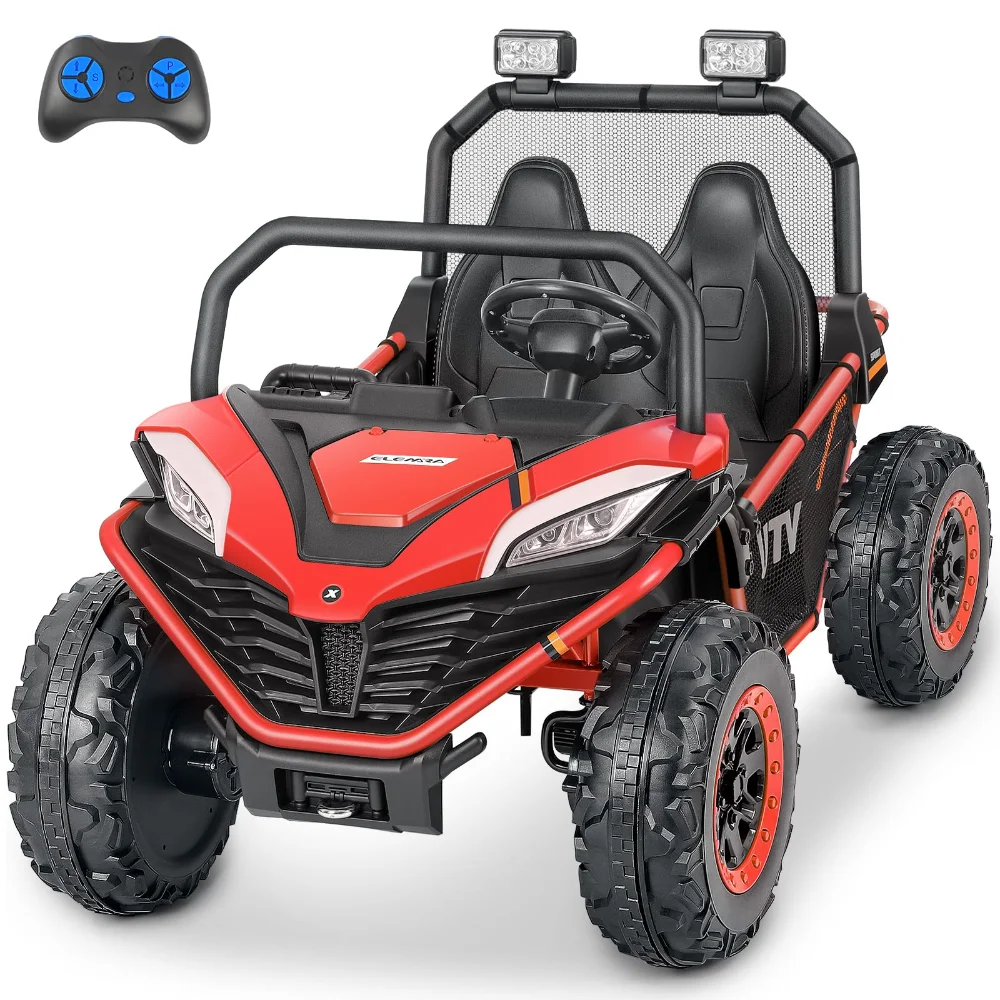
Twelve machines in the catalogue carry a parent remote running at 2.4 GHz. The remote overrides the pedal at any moment, allowing you to stop the machine if the child heads toward the street or a parked car. This feature transforms a real driveway from a hazard into a usable play space for a three-year-old who understands steering but not yet consequences.
The remote works from across the yard, though walls and cars block the signal. You hold the controller while the child holds the wheel. They press the pedal, and you decide when the power reaches the wheels. Some parents use this for months, gradually releasing control as the child learns to brake before the garage door. Others find their child rejects the override by age four, wanting independent operation and resenting the intrusion. Either way, the remote provides peace of mind during the learning phase.
The moment to set the remote aside arrives when the child consistently stops at the end of the driveway without prompting. This usually coincides with the age when they want to ride faster than the twelve volt machine allows. At that point, the remote becomes unnecessary and the child graduates to the next category. Until then, it serves as a safety net that allows younger siblings to keep up with older ones without risking a collision with the mailbox.
The step up to machines without a safety net
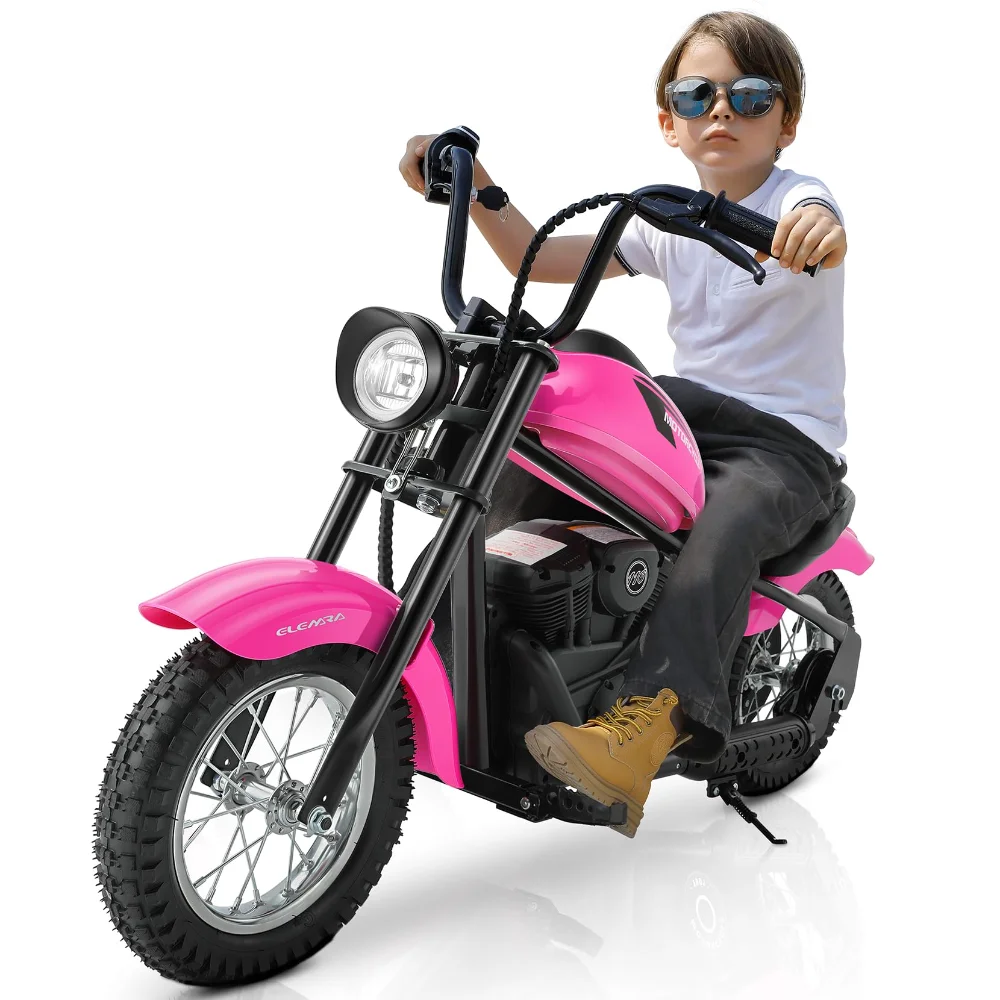
The step from a machine with a parent override to one without marks a real change in risk. Our drift karts and electric dirt bikes deliberately omit the remote. They are built for older children who can handle fifteen miles an hour on two wheels or a sliding turn on a low chassis. At those speeds, parental intervention from across the lawn is impossible anyway. The reaction time required exceeds the distance available.
This is the point where a helmet stops being optional. Federal regulations at 16 CFR part 1203 set performance requirements for headgear marketed as protecting a rider from head injury while cycling. Those requirements cover four tests: peripheral vision, positional stability, retention strength and impact attenuation. A helmet sold only for skateboarding or in-line skating does not meet the same standard and should not be used.
The child must also understand that grass and gravel are no longer surfaces to cross but hazards to avoid. The dirt bikes reach fifteen to fifteen point five miles an hour on level ground, far faster than the four to five miles an hour of a four-wheeled twenty-four volt machine.
Wet concrete at that speed is not a surface anybody wants to land on. We recommend closed-toe shoes, long pants, and a proper helmet before the first ride. The soft-start controller found on some twelve volt models is absent here. The throttle responds immediately to pressure without the gentle ramp-up.
The household problem of charging
Run time and charge time create a household problem rather than a simple specification. A full battery pack gives roughly forty to ninety minutes of driving, depending on the surface, the slope and the weight it carries. Charging from flat takes eight to twelve hours on the charger supplied. The first charge before first use requires six to eight hours.
This means planning the first ride for the evening, not the morning of the birthday. A child who opens the box at dawn will not drive until after dinner. If your garage has no convenient socket, every charge becomes an extension lead across a path that someone will trip over in the dark. The battery is the sealed lead-acid type on a standard connector, replaceable without replacing the machine, but it is heavy and awkward to move indoors to a utility room.
The wait is longer for twenty-four volt machines because the packs are larger, nine or ten amp-hours against the seven amp-hours common in twelve volt models. The charger works at the same rate, so more capacity means more hours at the wall. Prices across the catalogue run from $30.59 to $548.38, and the real cost includes the storage space in your garage and the patience to wait for the green light.
Some machines give a low-battery voice prompt before they stop, which helps avoid a machine stranded at the far end of a garden but does not speed up the outlet. Consider the socket location before you consider the colour of the car or the stickers on the bonnet.
What twenty-four volts actually costs you
A twenty-four volt machine costs you things that do not appear on the price tag. The larger battery packs weigh more, making the machine harder to lift into a boot or slide under a workbench. The dimensions grow to accommodate two seats and four-wheel drive, consuming more garage space. The initial charge takes longer because the nine or ten amp-hour packs fill slowly, delaying that first ride until evening.
These machines also cannot do everything. They are not all-terrain vehicles. Wet grass will still slow them, and a steep slope may exceed their traction even with four motors at four hundred watts per pair. In law they are toys, which is why the standard that governs them is ASTM F963 and why the paint on them answers to 16 CFR part 1303. Neither of those makes a machine safe to leave a child alone with.
The soft-start controller on some models prevents a jerk from the first press of the pedal, and spring suspension helps on uneven ground, but the machine will still tip if cornered too fast. The parent remote on the twelve volt models offers a safety net that disappears when you move to the faster categories. We build these machines for flat driveways and level lawns, for children within the weight limits and under parental supervision.
Exceed those boundaries and the machine will disappoint you. It will not climb a sandy hill or float across a flooded gutter. It will not protect a rider who refuses to wear a helmet. The battery will drain and the motor will stall. The season will end early, often before the battery needs replacement.
| What you are looking at | What 12V gives you | What 24V gives you |
|---|---|---|
| Top speed on four wheels | 1.9 to 3.5 mph | 4 to 5 mph |
| Top speed on two wheels | Not available | 15 to 15.5 mph |
| Rider weight limit | Around 66 lb | 88 to 150 lb |
| Battery capacity | 7 amp-hours | 9 or 10 amp-hours |
| Motors | 35 watts, usually one | Up to 400 watts per pair, often four-wheel drive |
| Parent remote | Available on twelve models | Deliberately omitted on dirt bikes and drift karts |
More of this sort of thing is in the Garage, and everyone at ELEMARA keeps the whole range one click away on the front page.